
"42 Surfboards. They’re Wooden. As Are Many Others."
“... disposable boards just aren't going to cut it anymore. Nor are toxic boards made from the same old poisonous soup that has been used since the early ‘60s. By hand-shaping local wood into beautiful high performance surfboards, our goal is to change the very paradigm of choosing a surfboard. Instead of choosing the quick and easy, the cheap and sleazy, the pop-out molded spray-painted cookie cutter foam toy, we want you to think a little. Think about the long-term cost. The environmental cost. The aesthetic cost. The social cost. And then go with the choice that is simply better by nature.”
So says Lars Bergström, founder of 42 Surfboards and holder of a PhD in Environmental Science.
42 Surfboards use sustainably harvested wood and abalone (it’s used for the set-in logo), with the waste sawdust composted at a local nursery. Their offices use wind power and they are members of both 1% for the Planet" and The Surfrider Foundation.
But they aren’t the only guys making wooden surfboards. For background on the where wooden surfboards came from in the first place, paddle over to the Surf History Preservation Collection.
Saturday

From Phoresia.org
42 Surboards: Lars Bergström Interview from September 23rd, 2007
Wooden surfboards are an interesting animal. They were the first, and some believe they’ll be the last. They can be super fast and responsive. They can be beautiful and last a lifetime. And yet, many people still view them as throwback technology and low performance wave tools.
There are however some seriously committed shapers/surfers out there rapidly changing this image and Lars Bergström of 42 Surfboards is no exception.
42 Surfboards is based in Oregon. They make chambered wooden surfboards and focus on a sustainable business model. This means maximizing every resource used in production and keeping work fun and rewarding. Lars is eloquent and well versed in the science of sustainability. Please be sure to check out 42’s blog and website. As always, we welcome your feedback and comments.
Main Website: http://www.42surfboards.com/index.html
42 Blog: http://42surfboards.blogspot.com/
Lars Bergström Interview
Q. There are so many things I’d like to ask you but I think first it would be cool to know how you went from a PhD. in Environmental Studies to making wooden surfboards full time (or vice versa I guess)? Are you from Oregon?
Like most things in life, there is no pattern until you look back. And you don’t get to look back until it is all over. Which makes me a little apprehensive about looking back… Still, if I had to wager a guess, I think it probably all happened at the same time.
I grew up in Laguna Beach, California. My dad went to school in Laguna and ran track on the same team as Billy Hamilton and a bunch of other great surfers. We lived down there, surfing, sailing and playing in the water until I was about twelve. At that point my parents had had all the crowds that they could handle and we moved up the coast to the Northwest. I shaped boards all through high school before moving first to Europe and then to Maui. Riding my boards in different conditions around the world has definitely influenced what I think about what shapes work well in different conditions.
For someone who eventually ended up with a Ph.D., my life has been remarkably centered on surfing. Growing up, that’s just what we did every day. As a teen, I skipped out on a year of high school and spent it surfing. Then after high school I took off for another couple years and spent them surfing. And again after my bachelors’ degree. And again after my masters degree. And now again, surfing is just what I do.
It wasn’t until after earning my Ph.D. in environmental science and teaching at a number of universities though, that I switched from shaping foam to wood. Here I was teaching my students about what needed to be done, or what could be done, and I just felt like it was time to put my money where my mouth was. Or maybe my planer where my mouth was.
Q. Before we talk about your boards I’m really interested in knowing more about the workings of your factory. I understand that you use sustainably harvested wood, recycle all of your waste, etc. Tell us about your sustainable business approach to 42.
The sustainable approach at 42 Surfboards is a work in progress. It isn’t something that is ever finished. Instead, it is how we come to work every morning. Every day we look at the work that we do and ask ourselves if there is a better way. Where are our materials coming from? How far did they have to travel? Are we happy with how our woods are grown and harvested? How much energy is used in building our blanks and shaping our boards? Where is that energy coming from? How much waste are we generating? How much of that can be reused? How much can be recycled? Is there a “higher” use for any of that waste? And every day, we push a little further.
In the end though, and at the core of our sustainable approach, is the quality of our surfboards. Just as we are constantly pushing for the most sustainable approach possible, we are also constantly pushing for the most durable approach to construction and design.
Between those two things, we hope to not only have the least environmental impact of any board builder on the planet but to actually have a net positive impact on both our local and global environment.
Q. You are part of the 1% For The Planet initiative. Additionally, you drastically reduced the prices on all of your boards, some by $1000. What gives? Yvon Chouinard talks a lot about (in Let My People Go Surfing) controlling growth to keep the company sane and employees happy. Where do you see your company’s growth in the future as wait times increase?
Edward Abbey once said something on the order of “Constant growth is the philosophy of a cancer cell.” I admire Yvon Chouinard and “Let my people go surfing” is required reading for all of our employees at 42 Surfboards. But I greatly admire the work of Edward Abbey and 42 Surfboards is not here to grow. 42 Surfboards is not here to become some mega-conglomerate. 42 Surfboards is here to build surfboards, be a great place to work, and show that you can have a positive impact on the environment while feeding your kids and doing something you love.
Being part of 1% For The Planet and The Surfrider Foundation are not something we do for image or marketing. These fantastic groups are actually part of our reason for existing. It is thrilling to take part of our earnings and commit them to real on-the-ground activism. At the same time though, it is an investment that any business that actually cares about our environment can’t afford to miss. Just as David Brower said “There is no business to be done on a dead planet”, there are no waves to be ridden in a dead ocean. We hope that all of our colleagues will join us in supporting 1% For The Planet and The Surfrider Foundation.
Reducing the prices of our boards this year had nothing to do with growth. Instead, it had everything to do with building surfboards. At 42 Surfboards, we want to build the best surfboards in the world. Beautiful, yes. Sustainable, yes. Durable, you bet. Ripping, absolutely! So while we are honored that people were treating our boards as art, we are more honored when we see riders pull into a ten-foot Puerto barrel on something that we have shaped for them. The reduction of our prices was intended pull boards off of living-room walls and put them up on long green walls all over the world. And so far, so good. The only drawback for our customers has been that the waiting line has gotten a little longer.
This leads right into the idea that one of 42 Surfboards’ reasons for existing is to be a great place to work. We refuse to freak out about waiting lines that ebb and flow. Instead, we take great care of our customers, put just as much care into every single surfboard, and we refuse to take deposits. In other words, every board is equally important to us. And if your board takes two months for our crew to get to you, that’s just how long it takes. At the moment, boards have been taking three to four months to get to our customers and that is something that everybody seems totally comfortable with.
Our growth to date has felt very natural. We aren’t out hyping our boards. People see them, see what they do, and they want them. And every year the word slowly spreads. And every year we slowly add employees to satisfy that demand. When that demand curve stops climbing and we have all of the people we need to do what we do, our growth will have come to its natural end. And we will still be having the best time of any group of people that I know who build surfboards for a living.
The secret to a good board? Perfection is the only acceptable result. The secret to a good company? Low expectations. At 42 Surfboards, its not about the “company”. Only the boards need to be perfect.
Q. Having lived in Portland, Oregon for a few years I know that locally made, socially and environmentally responsible products are not a hard sell. Where do your customers come from and have you had any challenges overcoming the stigma of the wooden surfboard?
Our customers come from all over the world. And I had no idea that there was a “wooden surfboard stigma” to overcome. The only response that I have ever gotten when someone sees one of our boards for the first time is absolute pure stoke. This is how boards have been built for 4000 years. OK, we are cheating with some of the tools we are using but, what the hell! It is, after all, the 21st century. But seriously, foam boards have only been popular since 1959 when some crabby chemist stole the formula from a fellow surfer and proceeded to monopolize the industry. There are no crabby chemists at 42 Surfboards. We are surfers who enjoy working with wood. And our customers are surfers who enjoy surfing a board that is simply better by nature.
Wood is not the newcomer on the block. Foam is the newcomer. Wood is cleaner to work with, easier on the planet, and rides better. Just ask the guy on the wood single fin that just caught ten waves to your one.
Q. I noticed that one of the longboards on the blog is chambered. Are the fishes and shortboards also chambered? Can you tell us a little about your construction methods and technical aspects of your boards like weight and volume?
All of our boards are radically chambered. No blank builders to date have ever been able to build chambered wood blanks to the specifications that we are today. Between this and using crystal clear epoxy and bomber layups, our boards are burly but are very light. Not as light as the imported pop-out you can find on Isle 11 at Sprawlmart, but so light that I constantly have to remind people in the shop to be careful. Otherwise they grab the board and, thinking that they are going to be lifting a log, they ram it solidly up into the ceiling. Sheepishly.
I have no clue what the volumes of our boards are. Our shapes are typically a little thicker with a little fuller rail than many of the other boards that you see in the water. This has less to do with the fact that we shape in wood and more to do with the idea that I like to build cheaters. Cheaters are boards that ride so well and so easy and grab you so many waves, that you feel like you are cheating. The rest of the world can feel like they are “progressing” by sitting neck deep in the lineup on their quad-fin skimboard. Don’t think I am not stoked to have them out there – I use that poor guy as my bouy marker so I know where to sit when I come back from my 50th wave of the session.
Q. We always want to know people’s different definitions and approach to the topic of sustainability. Having an academic background in environmental studies must have given you lots of exposure to the theories behind sustainability. But what are your views and how do you see it pertaining to the surf industry?
Sustainability is not BS. And it shouldn’t be about marketing. Sustainability means that your approach could continue on indefinitely. The idea can be applied to something small like 42 Surfboards, or your shopping habits, or your own household. Or it can be applied to something larger like capitalism. In the end though, sustainability is the only morally acceptable option. If you are not approaching your surfing, your business, and the rest of your life sustainably, you are stealing from your children and grandchildren. Period.
At the moment, I do not feel that many companies in the surf industry are taking sustainability seriously. And they won’t until their customers tell them, by taking their business to those who do, that sustainability really matters to them. And I can tell you from our experience that that is happening right now.
Q. We’ve interview Tom Wegener, Danny Hess and Paul Jensen, all master wood board craftsmen. Who has inspired your design methods?
I admire all of those guys, along with Mike Leveccia from Grain. They are all doing super cool things in so many different ways. But more than anybody, I have been influenced by my dad, my grandfather, and my great grandfather, all master woodworkers and watermen. I grew up surfing, sailing and working with my dad, Paul Bergstrom. He definitely taught me everything I know about working with wood. And it had been handed down the line to him from the two or three generations prior. To this day, many of the hand tools that we shape 42 Surfboards with originally belonged to my Great Grandfather and many of the fantastic power tools, big heavy steel beasts from Skil and Milwaukee, belonged to my Grandfather.
It may sound redundant coming from the shaper of chambered wood boards, but tradition is really important to us here at 42 Surfboards.
Q. Any words of wisdom /plans for the future?
Life is short. You are good. Ride a board that makes you proud.
Wooden surfboards are an interesting animal. They were the first, and some believe they’ll be the last. They can be super fast and responsive. They can be beautiful and last a lifetime. And yet, many people still view them as throwback technology and low performance wave tools.
There are however some seriously committed shapers/surfers out there rapidly changing this image and Lars Bergström of 42 Surfboards is no exception.
42 Surfboards is based in Oregon. They make chambered wooden surfboards and focus on a sustainable business model. This means maximizing every resource used in production and keeping work fun and rewarding. Lars is eloquent and well versed in the science of sustainability. Please be sure to check out 42’s blog and website. As always, we welcome your feedback and comments.
Main Website: http://www.42surfboards.com/index.html
42 Blog: http://42surfboards.blogspot.com/
Lars Bergström Interview
Q. There are so many things I’d like to ask you but I think first it would be cool to know how you went from a PhD. in Environmental Studies to making wooden surfboards full time (or vice versa I guess)? Are you from Oregon?
Like most things in life, there is no pattern until you look back. And you don’t get to look back until it is all over. Which makes me a little apprehensive about looking back… Still, if I had to wager a guess, I think it probably all happened at the same time.
I grew up in Laguna Beach, California. My dad went to school in Laguna and ran track on the same team as Billy Hamilton and a bunch of other great surfers. We lived down there, surfing, sailing and playing in the water until I was about twelve. At that point my parents had had all the crowds that they could handle and we moved up the coast to the Northwest. I shaped boards all through high school before moving first to Europe and then to Maui. Riding my boards in different conditions around the world has definitely influenced what I think about what shapes work well in different conditions.
For someone who eventually ended up with a Ph.D., my life has been remarkably centered on surfing. Growing up, that’s just what we did every day. As a teen, I skipped out on a year of high school and spent it surfing. Then after high school I took off for another couple years and spent them surfing. And again after my bachelors’ degree. And again after my masters degree. And now again, surfing is just what I do.
It wasn’t until after earning my Ph.D. in environmental science and teaching at a number of universities though, that I switched from shaping foam to wood. Here I was teaching my students about what needed to be done, or what could be done, and I just felt like it was time to put my money where my mouth was. Or maybe my planer where my mouth was.
Q. Before we talk about your boards I’m really interested in knowing more about the workings of your factory. I understand that you use sustainably harvested wood, recycle all of your waste, etc. Tell us about your sustainable business approach to 42.
The sustainable approach at 42 Surfboards is a work in progress. It isn’t something that is ever finished. Instead, it is how we come to work every morning. Every day we look at the work that we do and ask ourselves if there is a better way. Where are our materials coming from? How far did they have to travel? Are we happy with how our woods are grown and harvested? How much energy is used in building our blanks and shaping our boards? Where is that energy coming from? How much waste are we generating? How much of that can be reused? How much can be recycled? Is there a “higher” use for any of that waste? And every day, we push a little further.
In the end though, and at the core of our sustainable approach, is the quality of our surfboards. Just as we are constantly pushing for the most sustainable approach possible, we are also constantly pushing for the most durable approach to construction and design.
Between those two things, we hope to not only have the least environmental impact of any board builder on the planet but to actually have a net positive impact on both our local and global environment.
Q. You are part of the 1% For The Planet initiative. Additionally, you drastically reduced the prices on all of your boards, some by $1000. What gives? Yvon Chouinard talks a lot about (in Let My People Go Surfing) controlling growth to keep the company sane and employees happy. Where do you see your company’s growth in the future as wait times increase?
Edward Abbey once said something on the order of “Constant growth is the philosophy of a cancer cell.” I admire Yvon Chouinard and “Let my people go surfing” is required reading for all of our employees at 42 Surfboards. But I greatly admire the work of Edward Abbey and 42 Surfboards is not here to grow. 42 Surfboards is not here to become some mega-conglomerate. 42 Surfboards is here to build surfboards, be a great place to work, and show that you can have a positive impact on the environment while feeding your kids and doing something you love.
Being part of 1% For The Planet and The Surfrider Foundation are not something we do for image or marketing. These fantastic groups are actually part of our reason for existing. It is thrilling to take part of our earnings and commit them to real on-the-ground activism. At the same time though, it is an investment that any business that actually cares about our environment can’t afford to miss. Just as David Brower said “There is no business to be done on a dead planet”, there are no waves to be ridden in a dead ocean. We hope that all of our colleagues will join us in supporting 1% For The Planet and The Surfrider Foundation.
Reducing the prices of our boards this year had nothing to do with growth. Instead, it had everything to do with building surfboards. At 42 Surfboards, we want to build the best surfboards in the world. Beautiful, yes. Sustainable, yes. Durable, you bet. Ripping, absolutely! So while we are honored that people were treating our boards as art, we are more honored when we see riders pull into a ten-foot Puerto barrel on something that we have shaped for them. The reduction of our prices was intended pull boards off of living-room walls and put them up on long green walls all over the world. And so far, so good. The only drawback for our customers has been that the waiting line has gotten a little longer.
This leads right into the idea that one of 42 Surfboards’ reasons for existing is to be a great place to work. We refuse to freak out about waiting lines that ebb and flow. Instead, we take great care of our customers, put just as much care into every single surfboard, and we refuse to take deposits. In other words, every board is equally important to us. And if your board takes two months for our crew to get to you, that’s just how long it takes. At the moment, boards have been taking three to four months to get to our customers and that is something that everybody seems totally comfortable with.
Our growth to date has felt very natural. We aren’t out hyping our boards. People see them, see what they do, and they want them. And every year the word slowly spreads. And every year we slowly add employees to satisfy that demand. When that demand curve stops climbing and we have all of the people we need to do what we do, our growth will have come to its natural end. And we will still be having the best time of any group of people that I know who build surfboards for a living.
The secret to a good board? Perfection is the only acceptable result. The secret to a good company? Low expectations. At 42 Surfboards, its not about the “company”. Only the boards need to be perfect.
Q. Having lived in Portland, Oregon for a few years I know that locally made, socially and environmentally responsible products are not a hard sell. Where do your customers come from and have you had any challenges overcoming the stigma of the wooden surfboard?
Our customers come from all over the world. And I had no idea that there was a “wooden surfboard stigma” to overcome. The only response that I have ever gotten when someone sees one of our boards for the first time is absolute pure stoke. This is how boards have been built for 4000 years. OK, we are cheating with some of the tools we are using but, what the hell! It is, after all, the 21st century. But seriously, foam boards have only been popular since 1959 when some crabby chemist stole the formula from a fellow surfer and proceeded to monopolize the industry. There are no crabby chemists at 42 Surfboards. We are surfers who enjoy working with wood. And our customers are surfers who enjoy surfing a board that is simply better by nature.
Wood is not the newcomer on the block. Foam is the newcomer. Wood is cleaner to work with, easier on the planet, and rides better. Just ask the guy on the wood single fin that just caught ten waves to your one.
Q. I noticed that one of the longboards on the blog is chambered. Are the fishes and shortboards also chambered? Can you tell us a little about your construction methods and technical aspects of your boards like weight and volume?
All of our boards are radically chambered. No blank builders to date have ever been able to build chambered wood blanks to the specifications that we are today. Between this and using crystal clear epoxy and bomber layups, our boards are burly but are very light. Not as light as the imported pop-out you can find on Isle 11 at Sprawlmart, but so light that I constantly have to remind people in the shop to be careful. Otherwise they grab the board and, thinking that they are going to be lifting a log, they ram it solidly up into the ceiling. Sheepishly.
I have no clue what the volumes of our boards are. Our shapes are typically a little thicker with a little fuller rail than many of the other boards that you see in the water. This has less to do with the fact that we shape in wood and more to do with the idea that I like to build cheaters. Cheaters are boards that ride so well and so easy and grab you so many waves, that you feel like you are cheating. The rest of the world can feel like they are “progressing” by sitting neck deep in the lineup on their quad-fin skimboard. Don’t think I am not stoked to have them out there – I use that poor guy as my bouy marker so I know where to sit when I come back from my 50th wave of the session.
Q. We always want to know people’s different definitions and approach to the topic of sustainability. Having an academic background in environmental studies must have given you lots of exposure to the theories behind sustainability. But what are your views and how do you see it pertaining to the surf industry?
Sustainability is not BS. And it shouldn’t be about marketing. Sustainability means that your approach could continue on indefinitely. The idea can be applied to something small like 42 Surfboards, or your shopping habits, or your own household. Or it can be applied to something larger like capitalism. In the end though, sustainability is the only morally acceptable option. If you are not approaching your surfing, your business, and the rest of your life sustainably, you are stealing from your children and grandchildren. Period.
At the moment, I do not feel that many companies in the surf industry are taking sustainability seriously. And they won’t until their customers tell them, by taking their business to those who do, that sustainability really matters to them. And I can tell you from our experience that that is happening right now.
Q. We’ve interview Tom Wegener, Danny Hess and Paul Jensen, all master wood board craftsmen. Who has inspired your design methods?
I admire all of those guys, along with Mike Leveccia from Grain. They are all doing super cool things in so many different ways. But more than anybody, I have been influenced by my dad, my grandfather, and my great grandfather, all master woodworkers and watermen. I grew up surfing, sailing and working with my dad, Paul Bergstrom. He definitely taught me everything I know about working with wood. And it had been handed down the line to him from the two or three generations prior. To this day, many of the hand tools that we shape 42 Surfboards with originally belonged to my Great Grandfather and many of the fantastic power tools, big heavy steel beasts from Skil and Milwaukee, belonged to my Grandfather.
It may sound redundant coming from the shaper of chambered wood boards, but tradition is really important to us here at 42 Surfboards.
Q. Any words of wisdom /plans for the future?
Life is short. You are good. Ride a board that makes you proud.
Real life

 Waist to chest high at Pacific City last session. Sunny, breeze out of the north - rode my 6'9" single fin. Sailed the sailed the fourteen footer in 15-25 knots a couple days ago. Hoping for a bit of kiteboarding today or tomorrow. Went clamming the other morning (actually I surfed while the rest of the crew fearlessly but unsuccsessfully hunted clams) and crabbing later that afternoon (just as fearless and unsuccessful).
 I've been running across an awful lot of folks lately that are waiting for "real life"/retirement/the weekend. Don't do it! Life is happening right now while you are killing time. Get on it! Get busy! Do what it is that you want to do and do it now. This is "real-life"!
Friday
Surf well.
Its been a little crazy up here. All the same, I apologize for the gap in writing. Many of you have told me that you subscribe and wait anxiously for pictures of the new boards to arrive. We definitely appreciate that and do our best to keep the pictures coming.
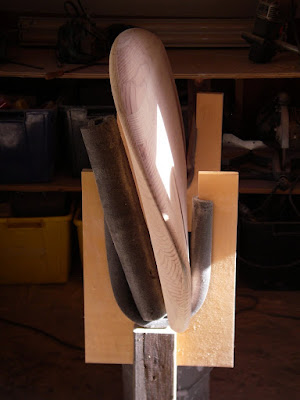
Other than the crazy swell and storm after storm, there is all sorts of other action going on up here. For one, we are moving! We are buying the tools that our blank maker has been using to build our blanks and moving into a giant old brick icehouse in down-town Hood River. We’ll keep you posted as we slowly get moved in. There will be a bit of a gap while we move but by spring we should be throwing wood chips consistently again.
The other action that happens here at this time of year is skiing. The snow is falling and we are all up on the mountain two or three days a week. Or four or five, depending on the week.
The Pacific Northwest is fantastic!
Surfing here though, is not for the meek. On Thanksgiving Day I was surfing a well known rock point. This is not some out-of-the-way secret spot. This is one of the main spots up here. If you surf there, you know exactly where I am talking about. If you don’t surf there, the exact location doesn’t really matter that much.

The swell was supposed to be bigger but ended up at 14-16 at right around 16 seconds. This put the surf that morning at several times overhead - more than 2X but less than 4X overhead.
The sky was clear and the temperature was a few degrees below freezing. There were pools of ice on the ground where guys had taken their wetsuits off the afternoon before. I say afternoon and not evening because it gets dark around four this time of year. The water in the gutter was frozen and all of the rocks down to the waterline were covered with a thick frost.
The rockfrost combined with a huge surge caused by the highest tide of the year was making getting into the water a real trick. While slithering into my wetsuit I watched two people get flatly denied. Getting denied here does not just mean getting caught inside. It means getting thrown up on the rocks, dragged back out, thrown up again, etc… It’s never pretty and it happens rarely because you are so focused.
The wind was howling offshore. The 20-30 knots of thick cold winter air seemed to be throwing half the water in the lip out the back. The other half of the lip was being held up impossibly long before pitching out twice as far as the wave was high. As beautiful as it was from the beach, the reality of what that meant from the water would soon become apparent.

I slipped out with no adventures. Watching the handful of other surfers ride was a trip. It struck me that we are so small out there. Between the raging currents, the howling wind, the ever-present wildlife, the cold water, and the forest hanging off the rocks, you just get the feeling that you are so insignificant.
I caught a couple fast waves and was having a good time. It is always wild to drop in on a big wave when it is blowing that hard. Even on a wood board you just get blown off the top of the wave. Now admittedly, I should have been on a bigger board. But the biggest that I had in the rack was a 6’8” single fin. So a 6’8” single it was.
On a board that short, in waves that big, when it is blowing that hard, your only choice is to take off under the lip. The tricky part on Thanksgiving Day was that the wind was holding the lip up so long and there were so few guys out that you couldn’t quite tell where “just under the lip” was going to be. In conditions like that, sometimes you are early and you just get a face full of cold buckshot spray. Sometimes you are right on and you find yourself feathering a long bottom turn under a few tons of chilly green Pacific juice. And then sometimes you mess up and get caught inside begging for the lip to stay vertical for just two more seconds.
On one of those waves I sprint-paddled towards the heaving lip with equal parts hope and dread. Even as the lip pitched, split between the tons of water coming down and the tons of spray going up and out the back, I hoped that I could sneak under. Even as the lip split the ocean’s surface 15 feet in front of me, I still hoped I could dive down the rabbit's hole that the glass hammer had just punched. But none of that was to be. Instead, the crushing lip laughed at my feeble three foot duck-dive and just ripped me to pieces. I didn’t let go of my board and instead rode it free-falling down the holes of foam and shooting up the geysers of green water until I finally came back up into the sun. At that point I couldn’t really move my upper body and for a second I wondered if I had broken my neck. My subconscious is always a little melodramatic.
It took me a couple seconds to realize that the wave had blown my hooded vest off my head and down my shoulders. My whole upper body was sticking out of the face of my hood! Crazy. I wriggled back into my hood and took a couple more on the head before making it back into the rip.
Now I was cold.

My suit is two years old and it is amazing how cold it is. I have been meaning to order a new one from Hotline but I just haven’t done it yet. I really need to do that.
As it was, I was freezing, thoroughly pounded, and stroking madly down the rip when I spotted my buddy.
Contrary to the popular image, here in the Pacific Northwest you never surf alone. There may or may not be other humans with you but you always have a couple seals or sea lions to keep you company. My buddy today was a big beefy sea lion, at least as tall as my friend Didi, a big Kiwi, but much bigger around.
The rip was dredging out right through the impact zone. Right along the long rocky point. I was paddling out on the right side of the rip, left of the eddy but right of the rock shelf. This shelf was pronounced because of one of the highest tides of the year. The smaller waves weren’t really affecting it much but the larger waves were emptying that shelf like water pouring off a waterfall. I wondered about that as I watched the sea lion power down the point on the left side of the rip, between me and the shelf.

Obviously my buddy had thousands more water hours than me but I still wondered about his line. He ducked under the first wave of the next set with no trouble and I did the same. As I came up out of the back of the wave, the second wave of the set was already feathering and the shelf was pouring off into its path.
My buddy was ahead of me by almost a whole wave period at this point so I was able to watch the whole thing in slow motion. As the shelf emptied off, he slid across in the four to five foot deep slab of water that was pouring off the side. And then, along with all of that water, he became part of the lip and crashed back down in the thick airborne slab onto the freshly emptied rocks.

We've all been there. We've all gone over the falls. Admittedly, not in such a dangerous spot. But this guy was experienced and I wondered how he was going to make it out of such a bad spot.
By the time I duck dived under the wave, my buddy was back in the rip and headed out to sea. With his head and tail down, he was curled into a "U" shape. He must have either hit his head or broken his back. In either case, he was clearly dead. He floated all the way out the end of the rip just behind me and never moved.

I felt really sad. Sad, shook up, and, to be completely honest, more than a little scared. I mean, here was a true waterman, a guy who had spent his whole life in the water, and he was killed by the wave less than 100 feet from me. He was much more skilled than I. Much stronger than I. Much faster than I. Much more experienced than I.

My session was wrecked. For the rest of the morning, I flailed. I blew every critical take off, wussed every critical turn, and didn't pull into the barrel for the rest of the session. Every time I kicked out and spun around into the rip, I was freaking. And whenever I wasn't thinking about my short-lived acquaintance with the sea lion, I was wondering how I was going to get in without suffering the same fate.

I finally caught a particularly long wave at the end of a set and made a mad scramble to the beach. To safety. And to another nice day of working with wood.

Surf well.
Lars and the 42 Crew

Other than the crazy swell and storm after storm, there is all sorts of other action going on up here. For one, we are moving! We are buying the tools that our blank maker has been using to build our blanks and moving into a giant old brick icehouse in down-town Hood River. We’ll keep you posted as we slowly get moved in. There will be a bit of a gap while we move but by spring we should be throwing wood chips consistently again.
The other action that happens here at this time of year is skiing. The snow is falling and we are all up on the mountain two or three days a week. Or four or five, depending on the week.
The Pacific Northwest is fantastic!
Surfing here though, is not for the meek. On Thanksgiving Day I was surfing a well known rock point. This is not some out-of-the-way secret spot. This is one of the main spots up here. If you surf there, you know exactly where I am talking about. If you don’t surf there, the exact location doesn’t really matter that much.

The swell was supposed to be bigger but ended up at 14-16 at right around 16 seconds. This put the surf that morning at several times overhead - more than 2X but less than 4X overhead.
The sky was clear and the temperature was a few degrees below freezing. There were pools of ice on the ground where guys had taken their wetsuits off the afternoon before. I say afternoon and not evening because it gets dark around four this time of year. The water in the gutter was frozen and all of the rocks down to the waterline were covered with a thick frost.
The rockfrost combined with a huge surge caused by the highest tide of the year was making getting into the water a real trick. While slithering into my wetsuit I watched two people get flatly denied. Getting denied here does not just mean getting caught inside. It means getting thrown up on the rocks, dragged back out, thrown up again, etc… It’s never pretty and it happens rarely because you are so focused.
The wind was howling offshore. The 20-30 knots of thick cold winter air seemed to be throwing half the water in the lip out the back. The other half of the lip was being held up impossibly long before pitching out twice as far as the wave was high. As beautiful as it was from the beach, the reality of what that meant from the water would soon become apparent.

I slipped out with no adventures. Watching the handful of other surfers ride was a trip. It struck me that we are so small out there. Between the raging currents, the howling wind, the ever-present wildlife, the cold water, and the forest hanging off the rocks, you just get the feeling that you are so insignificant.
I caught a couple fast waves and was having a good time. It is always wild to drop in on a big wave when it is blowing that hard. Even on a wood board you just get blown off the top of the wave. Now admittedly, I should have been on a bigger board. But the biggest that I had in the rack was a 6’8” single fin. So a 6’8” single it was.
On a board that short, in waves that big, when it is blowing that hard, your only choice is to take off under the lip. The tricky part on Thanksgiving Day was that the wind was holding the lip up so long and there were so few guys out that you couldn’t quite tell where “just under the lip” was going to be. In conditions like that, sometimes you are early and you just get a face full of cold buckshot spray. Sometimes you are right on and you find yourself feathering a long bottom turn under a few tons of chilly green Pacific juice. And then sometimes you mess up and get caught inside begging for the lip to stay vertical for just two more seconds.
On one of those waves I sprint-paddled towards the heaving lip with equal parts hope and dread. Even as the lip pitched, split between the tons of water coming down and the tons of spray going up and out the back, I hoped that I could sneak under. Even as the lip split the ocean’s surface 15 feet in front of me, I still hoped I could dive down the rabbit's hole that the glass hammer had just punched. But none of that was to be. Instead, the crushing lip laughed at my feeble three foot duck-dive and just ripped me to pieces. I didn’t let go of my board and instead rode it free-falling down the holes of foam and shooting up the geysers of green water until I finally came back up into the sun. At that point I couldn’t really move my upper body and for a second I wondered if I had broken my neck. My subconscious is always a little melodramatic.
It took me a couple seconds to realize that the wave had blown my hooded vest off my head and down my shoulders. My whole upper body was sticking out of the face of my hood! Crazy. I wriggled back into my hood and took a couple more on the head before making it back into the rip.
Now I was cold.

My suit is two years old and it is amazing how cold it is. I have been meaning to order a new one from Hotline but I just haven’t done it yet. I really need to do that.
As it was, I was freezing, thoroughly pounded, and stroking madly down the rip when I spotted my buddy.
Contrary to the popular image, here in the Pacific Northwest you never surf alone. There may or may not be other humans with you but you always have a couple seals or sea lions to keep you company. My buddy today was a big beefy sea lion, at least as tall as my friend Didi, a big Kiwi, but much bigger around.
The rip was dredging out right through the impact zone. Right along the long rocky point. I was paddling out on the right side of the rip, left of the eddy but right of the rock shelf. This shelf was pronounced because of one of the highest tides of the year. The smaller waves weren’t really affecting it much but the larger waves were emptying that shelf like water pouring off a waterfall. I wondered about that as I watched the sea lion power down the point on the left side of the rip, between me and the shelf.

Obviously my buddy had thousands more water hours than me but I still wondered about his line. He ducked under the first wave of the next set with no trouble and I did the same. As I came up out of the back of the wave, the second wave of the set was already feathering and the shelf was pouring off into its path.
My buddy was ahead of me by almost a whole wave period at this point so I was able to watch the whole thing in slow motion. As the shelf emptied off, he slid across in the four to five foot deep slab of water that was pouring off the side. And then, along with all of that water, he became part of the lip and crashed back down in the thick airborne slab onto the freshly emptied rocks.

We've all been there. We've all gone over the falls. Admittedly, not in such a dangerous spot. But this guy was experienced and I wondered how he was going to make it out of such a bad spot.
By the time I duck dived under the wave, my buddy was back in the rip and headed out to sea. With his head and tail down, he was curled into a "U" shape. He must have either hit his head or broken his back. In either case, he was clearly dead. He floated all the way out the end of the rip just behind me and never moved.

I felt really sad. Sad, shook up, and, to be completely honest, more than a little scared. I mean, here was a true waterman, a guy who had spent his whole life in the water, and he was killed by the wave less than 100 feet from me. He was much more skilled than I. Much stronger than I. Much faster than I. Much more experienced than I.

My session was wrecked. For the rest of the morning, I flailed. I blew every critical take off, wussed every critical turn, and didn't pull into the barrel for the rest of the session. Every time I kicked out and spun around into the rip, I was freaking. And whenever I wasn't thinking about my short-lived acquaintance with the sea lion, I was wondering how I was going to get in without suffering the same fate.

I finally caught a particularly long wave at the end of a set and made a mad scramble to the beach. To safety. And to another nice day of working with wood.

Surf well.
Lars and the 42 Crew
42 surfboards

 All over the world, surfboard production slows according to conditions. We, as an industry, could be used as a global conditions barometer.
 Here at 42 Surfboards, we are no different. In fact, if anything, we are even more vulnerable to it than most. At most shops, the staff only disappears when the surf is good. And believe me, I am the first out the door when the surf is good. And I am not alone - we lose our entire glass shop every winter to Mexico and points south!
 The surf is only the beginning though!
Forrest is Jonesing when the water in the rivers is up (kayaking). Or when the dirt on the trails is that perfect humidity on the spectrum from ball-bearings slick dust to bike-eating muck (mountain biking).
 Frank is out racing his cars around as soon as the sun is shining and the track is dry (Ferrari, Cobra, M3, Austin Healy, Lotus, etc...).
 And I am no better than the rest. I am constantly watching the weather. If the swell is up and the period is long, I want to surf. No excuses. If the wind is up, I want to sail the catamaran. Or go windsurfing. Or kiteboarding. I just want to ride waves! I don't really care how.
 The problem is, what conditions does that leave? Man, if we didn't enjoy building wood surfboards so much, no work would ever get done.
Today, Mark's board had to wait. One board, a 6'3 five-fin Bonzer for Maui, got sanded and the rest of the day went to carving turns on frozen water.
Look at what we have to deal with up here! This is for Mount Hood, 35 minutes from our shop:
Tonight: Periods of snow. Low around 21. Windy, with a west southwest wind between 24 and 31 mph, with gusts as high as 37 mph. Chance of precipitation is 100%. Total nighttime snow accumulation of 10 to 14 inches possible.
Monday: Periods of snow showers. High near 21. Breezy, with a southwest wind between 14 and 24 mph, with gusts as high as 31 mph. Chance of precipitation is 80%. New snow accumulation of 3 to 5 inches possible.
Monday Night: Snow likely. Cloudy, with a low around 22. Windy, with a south wind 14 to 17 mph becoming southwest between 29 and 32 mph. Chance of precipitation is 70%. New snow accumulation of 7 to 11 inches possible.
Tuesday: Periods of snow. High near 26. Windy, with a west southwest wind 41 to 44 mph decreasing to between 16 and 19 mph. Winds could gust as high as 55 mph. Chance of precipitation is 90%.
Tuesday Night: Periods of snow showers. Low around 21. West wind 8 to 16 mph becoming south. Winds could gust as high as 20 mph. Chance of precipitation is 80%.
Wednesday: Periods of snow. High near 21. Windy. Chance of precipitation is 80%.
 When are we every going to get any work done? Luckily Mark confirmed his board today, and we will, in fact, get it finished at some point during the next week/four feet of snow!
Not tonight though - tonight went to mounting up my new skis, a pair of Salomon Gun 188's. So stoked.


 Play hard!
Lars and the 42 Crew
42 surfboards
Browsing around

 We were up north browsing around over the weekend. As always, the no surf-spot pictures policy is in full force. Sorry about that. Many of you have complained about the lack of Pacific Northwest action shots. There is just no other way to travel around up here and be welcome though. C'est la vie.
 As it is, when we show up somewhere, everybody knows that we never kiss and tell.
That doesn't mean we can't share some non-surf spot shots with you though.


Let's get with the program here, kids.
 "The view from space. The harpooning of whales. The Cuyahoga in flames. Smog in Los Angeles. The clubbing of baby seals. Toxic waste dumps. The hunting of wolves near Yellowstone. The Amazon in flames. Polar bears on melting ice." - from Break Through
 What's it going to take?
 Not being able to surf after a rain? That junk in the water is coming off of your street!
 Oil spills shutting down the entire central coast? That stuff goes into the foam that your board is shaped out of! You use it to drive to the beach!
 When is going to hit home? When are you going to start paying attention? When exactly are you going to take your first step?
Let's get on it!
Time for the winter leash


Head and half today and fantastic. Long, fast, fun rides and I only lost my board twice. Winter is here and I have got to put a leash on. Both swims were from the outside. The first time, I only had to swim all the way in. The second time, I had to swim all the way in and then chase the board all the way out the rip again. I'll get a leash.
Thanks a lot for all the great feedback. I am glad that you like the boards. As long as you do, we'll keep making them.

Life is short. You are good. Ride a board that makes you proud.
I'm a karmatarian


Winter is here in full force. The swell hung around 25 feet all week and we got another two feet of snow on the mountain last night. Things are back to normal!

Don't eat shark. Karma, karma, karma!
Life is short. You are good. Ride a board that makes you proud.
Subscribe to:
Posts (Atom)